Gridline design set
The engineering sheet: a quiet visible grid, units in every table header, measurements in mono and pass or fail decided by the table rather than the prose.
Personality
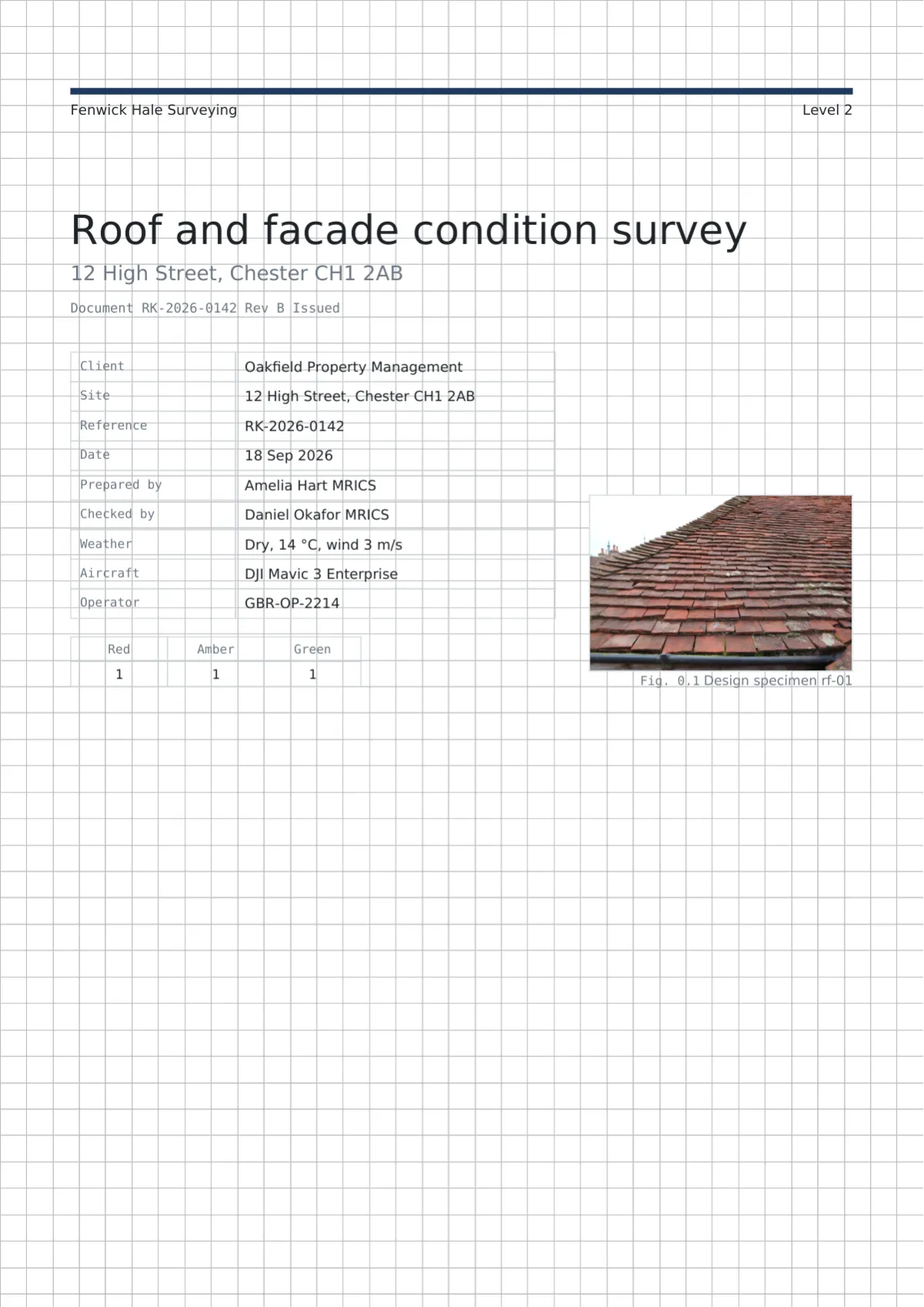
Gridline is for reports whose findings are numbers: string voltages, spot temperatures, cubic metres and tonnes. Its cover is a control sheet on a faint graph-paper grid, with a primary rule across the top, the company name and report type beneath it, a mono reference line and a key-value block of site, client, dates, method, instrument and status. The photograph is a small framed plate labelled Fig. 0.1, and rating counts appear as a boxed matrix strip.
Every table is a full hairline grid with a tinted header, and under each header label a second line in mono gives the unit: V, A, MΩ, °C, m³. Computed cells carry a light primary tint with a note saying so, and a column formatted as status renders Pass, Fail or Monitor as a scale band. Tables wider than nine columns move to a landscape page.
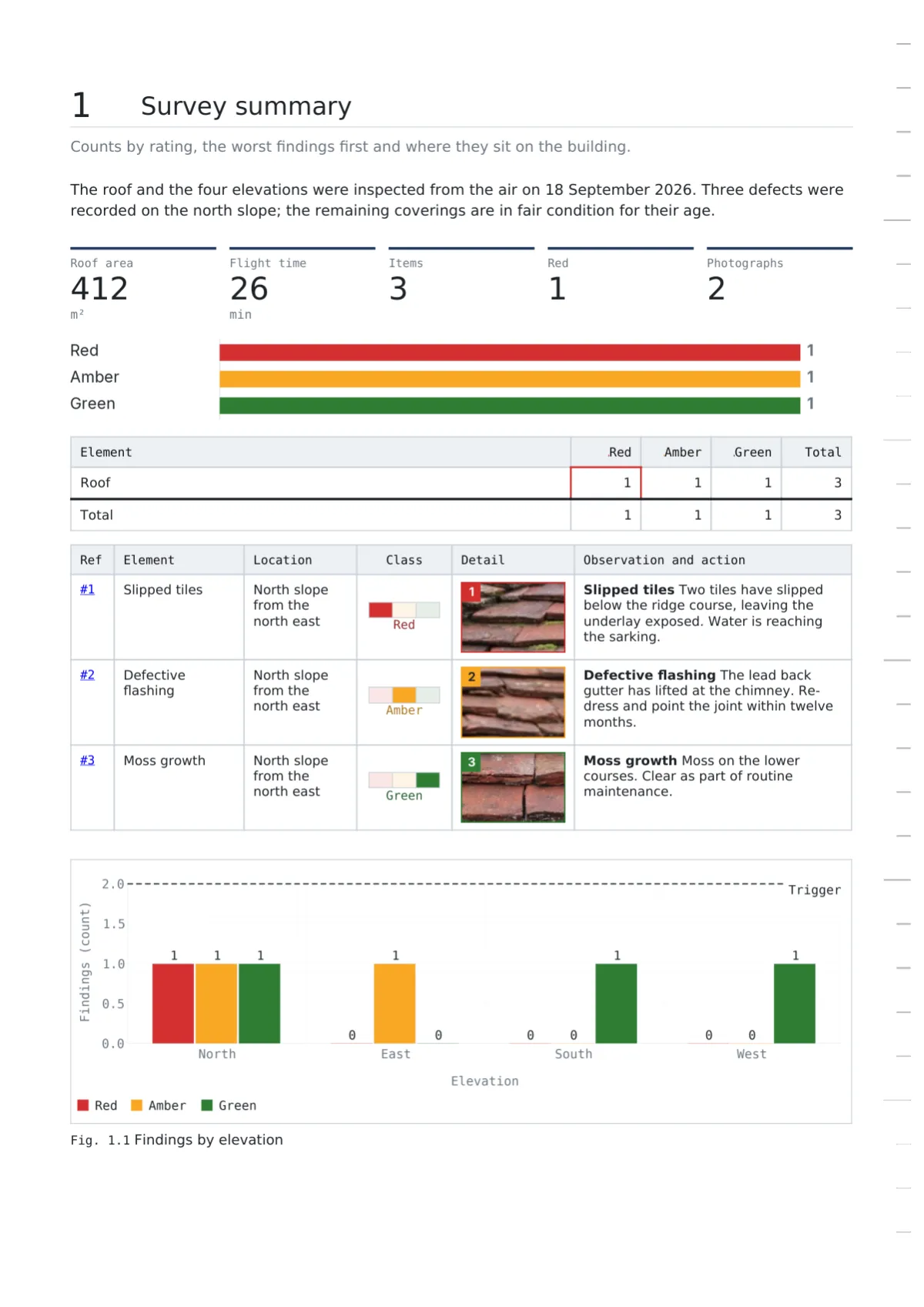
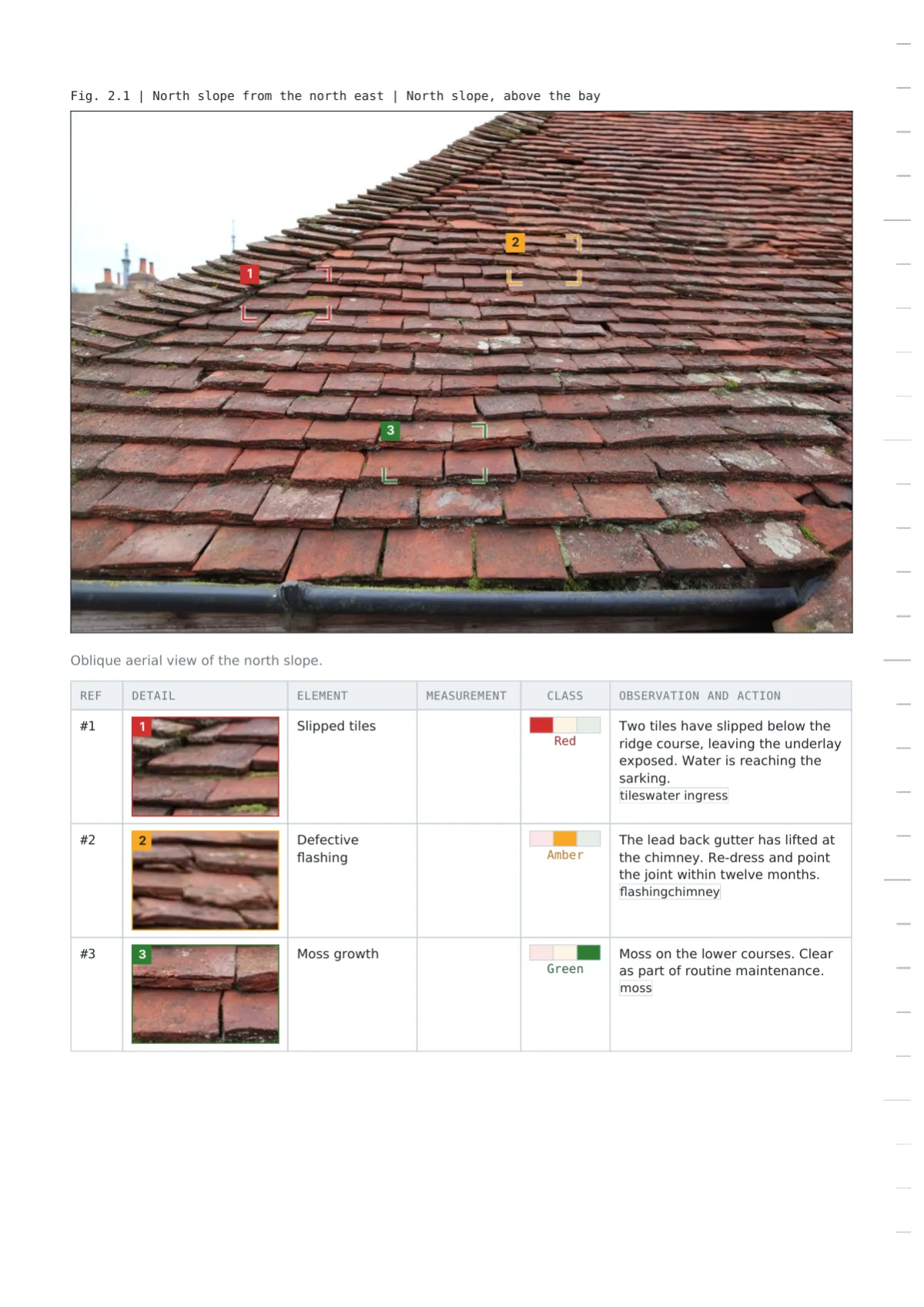
Ratings are scale bands: a short strip with one cell per class, only the item’s class filled, followed by a mono code such as CoA 2. Photographs use corner marks rather than boxes, and thermal pairs sit in one table, infrared beside visible with the scale strip between them and spot tiles beneath. It suits solar PV verification, building thermography, stockpile surveys and mechanical and electrical reporting.
Element tour
Cropped from the specimen report at 1600 px, on the cool palette.
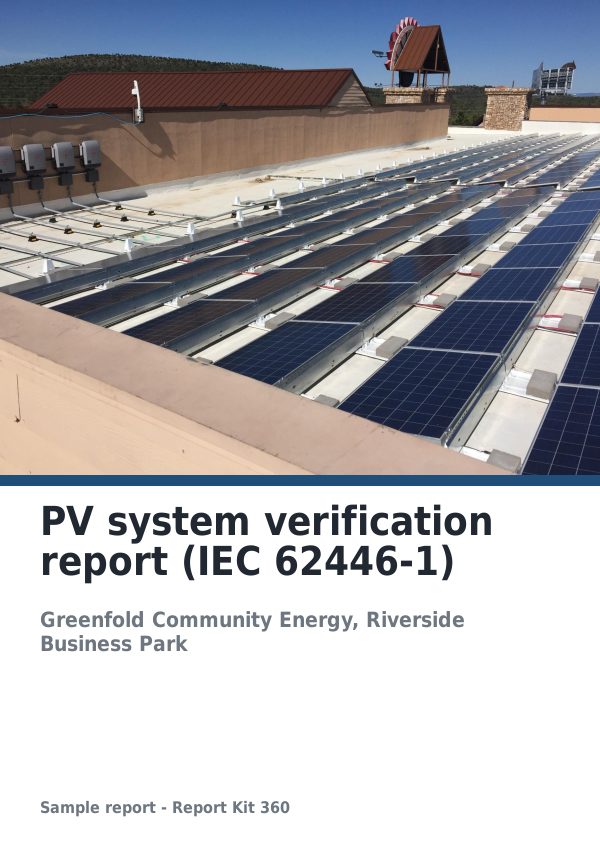
Page 1. Control-sheet cover: graph-paper grid, 1.5 mm primary rule, Roboto Bold title, mono reference line, the document control grid and Fig. 0.1 framed beneath it.
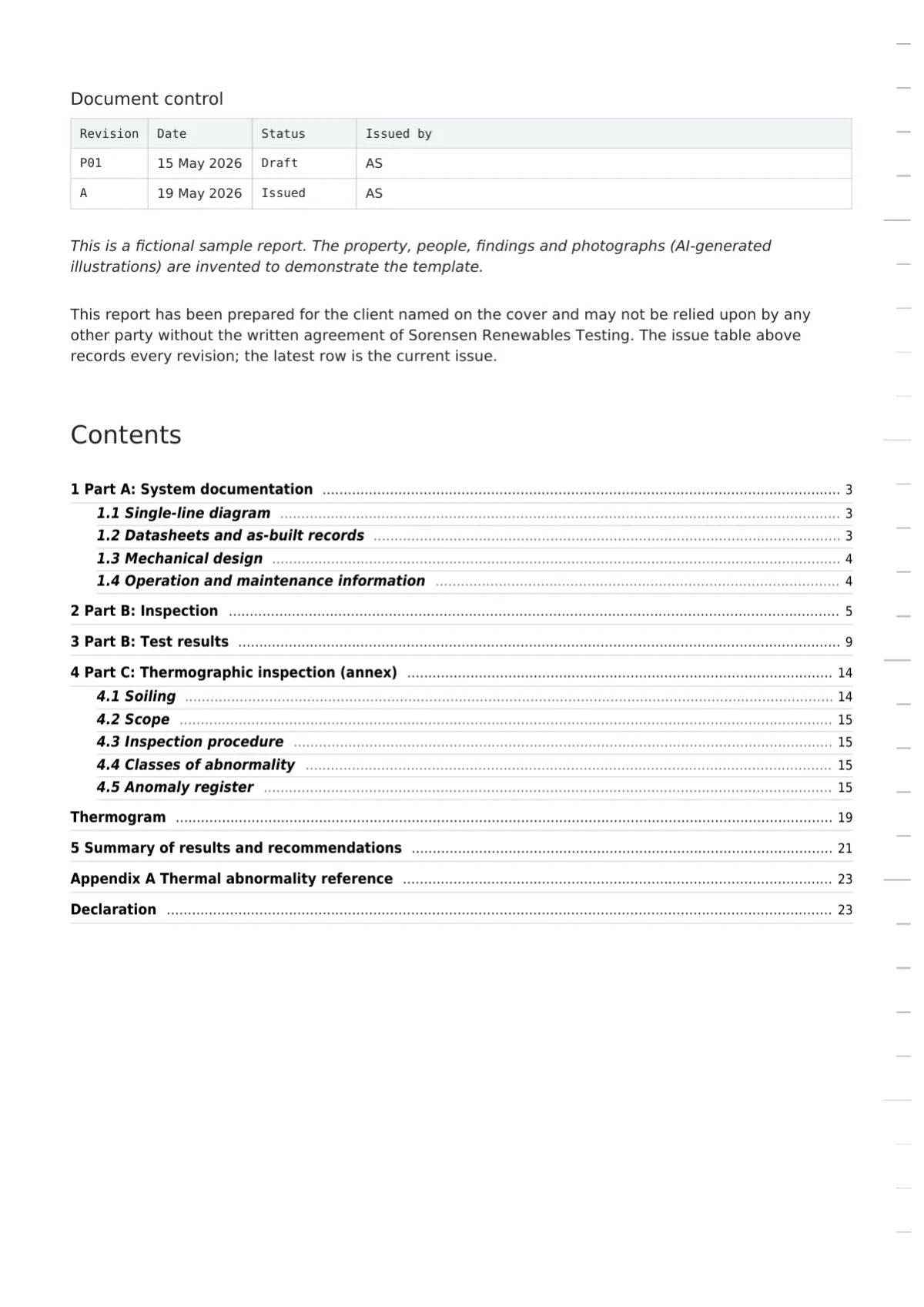
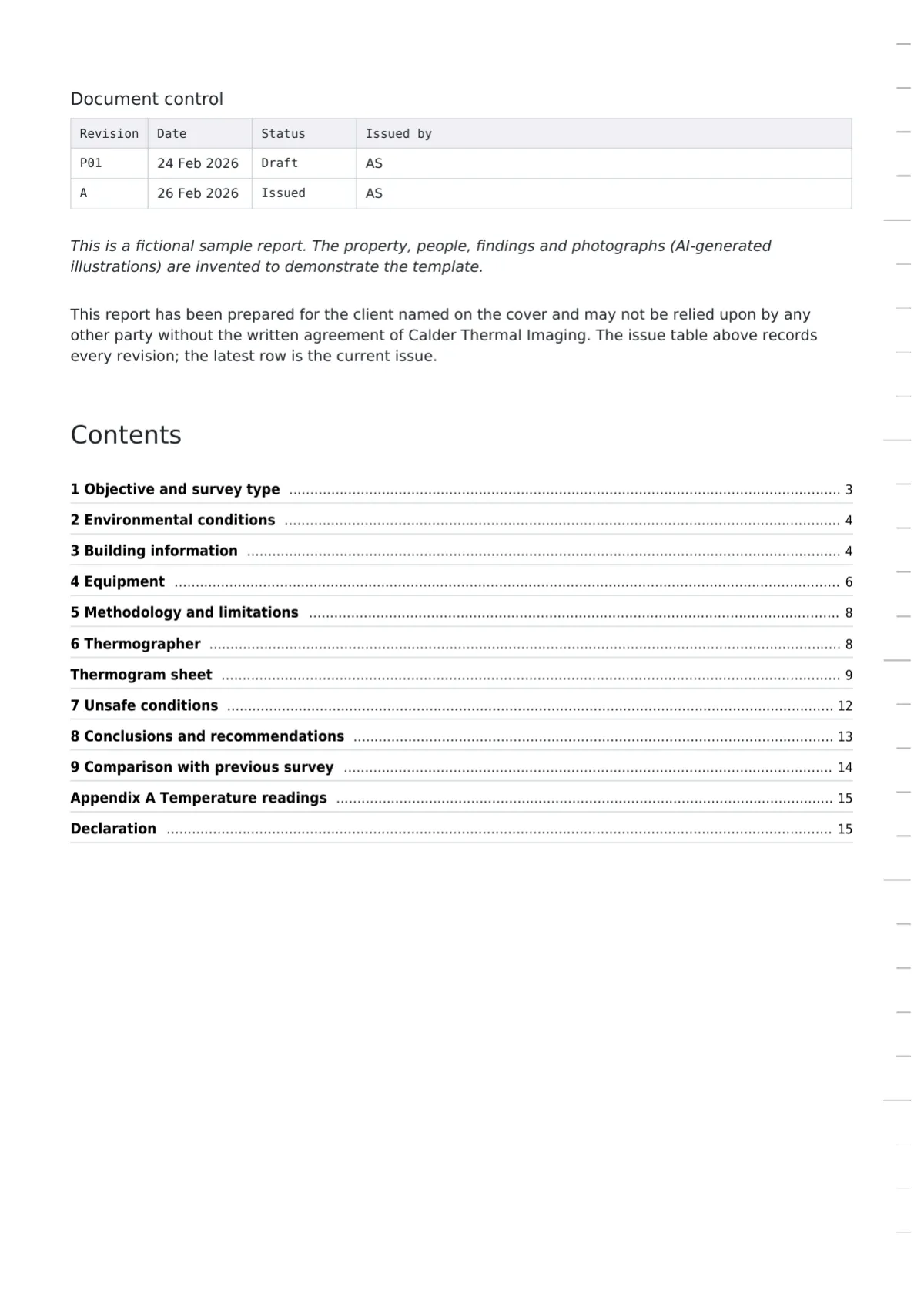
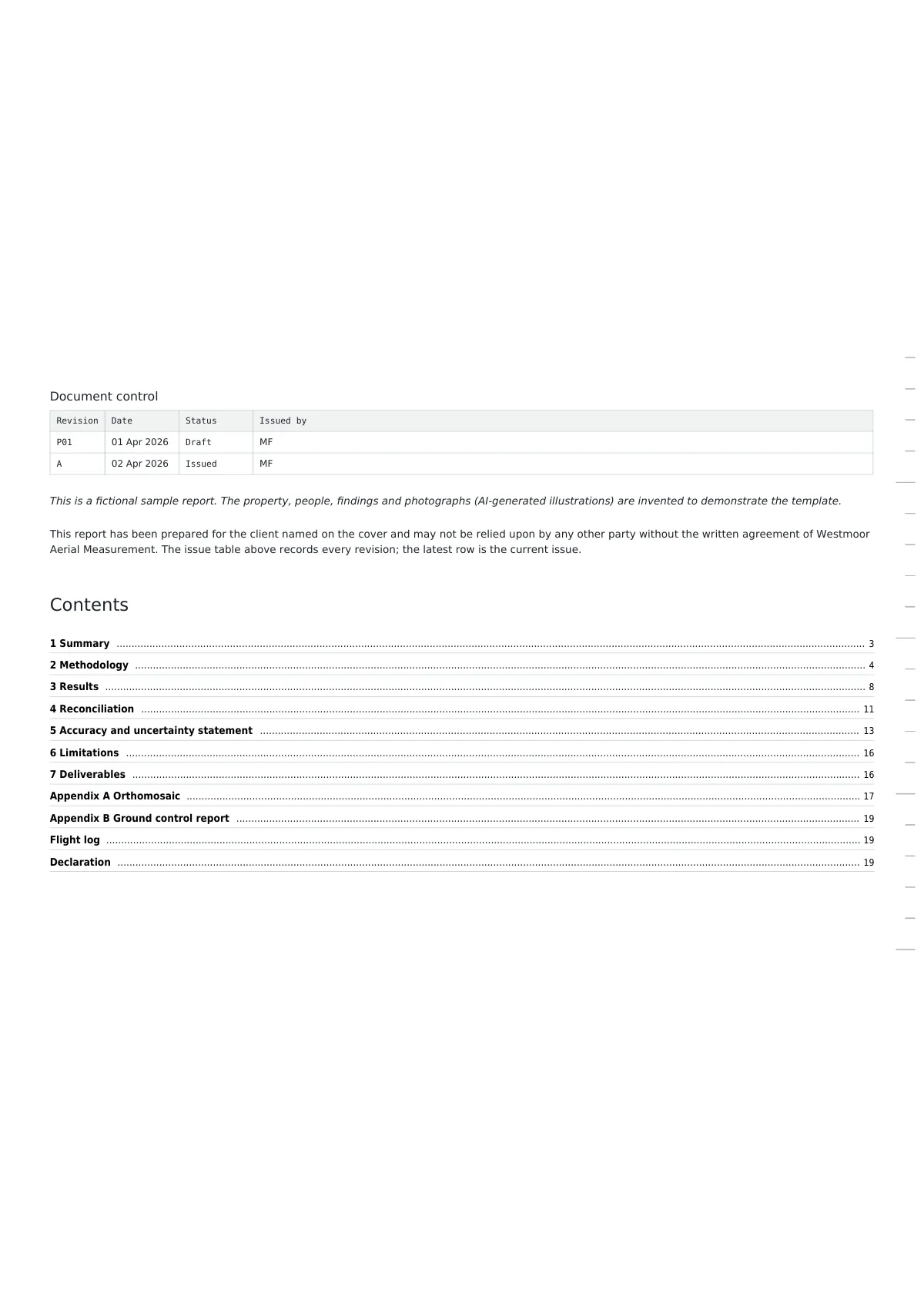
Page 2. Ruled contents with mono numbers and Roboto titles, the document control table first, and a list of figures and tables when there are four or more.
Page 3. Matrix summary: KPI tiles, a horizontal bar of counts, then rows of locations against columns of classes with the worst non-zero cell outlined in its colour.
Page 4. Defect photo grid table: figure header in mono with gridline and timestamp, corner marks on the photograph, then ref, 34 mm crop, element, measurement, scale band and observation.
Page 6. Unit-grid formula table: full hairline grid, tinted header with the unit line, computed cells shaded, Pass or Fail scale bands in the result column, totals on a double rule.
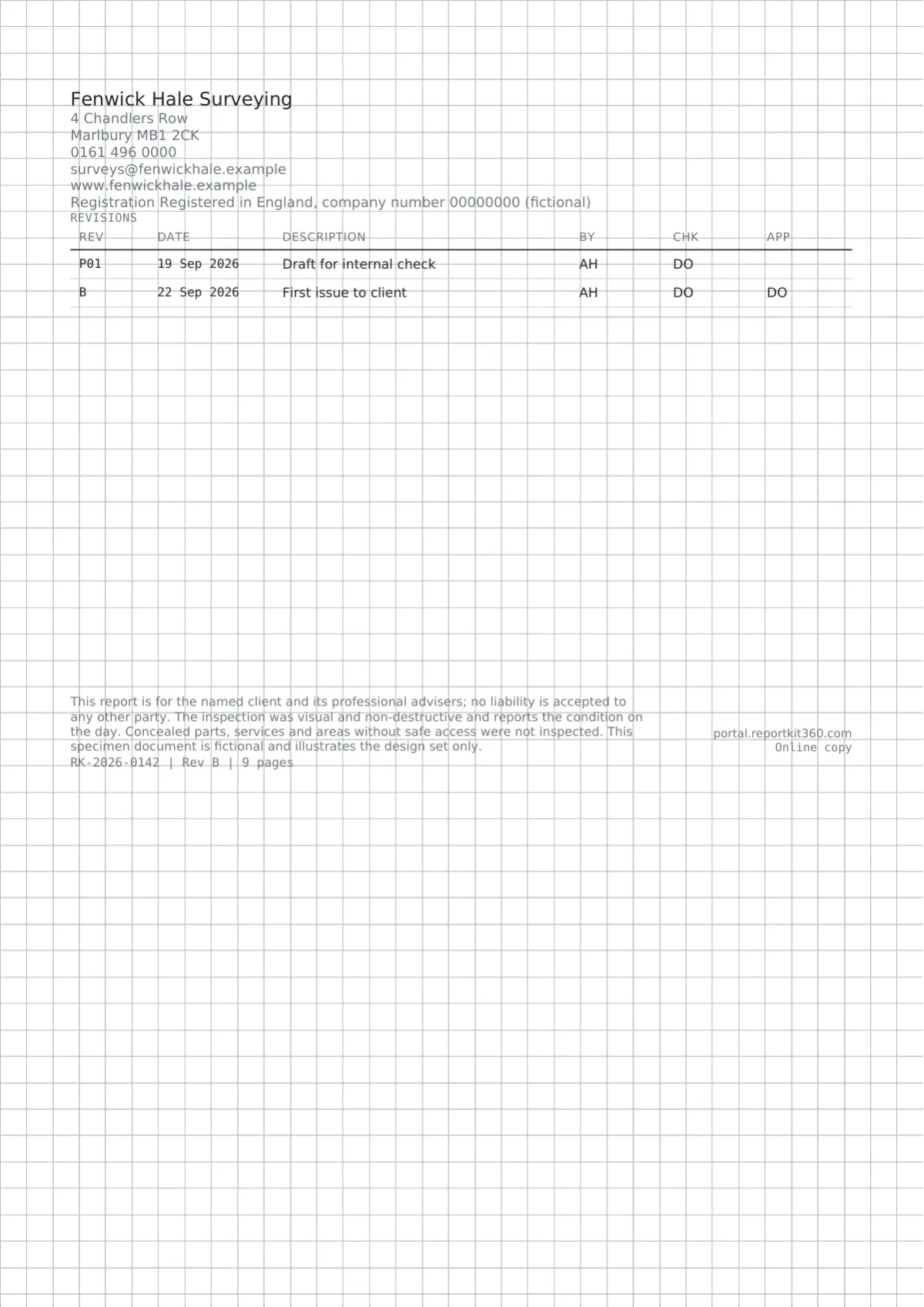
Page 7. Control back page on the grid: company block, the instrument table when the report records instruments, the revision strip with prepared, checked and approved, and the reference at the foot.
In a full report
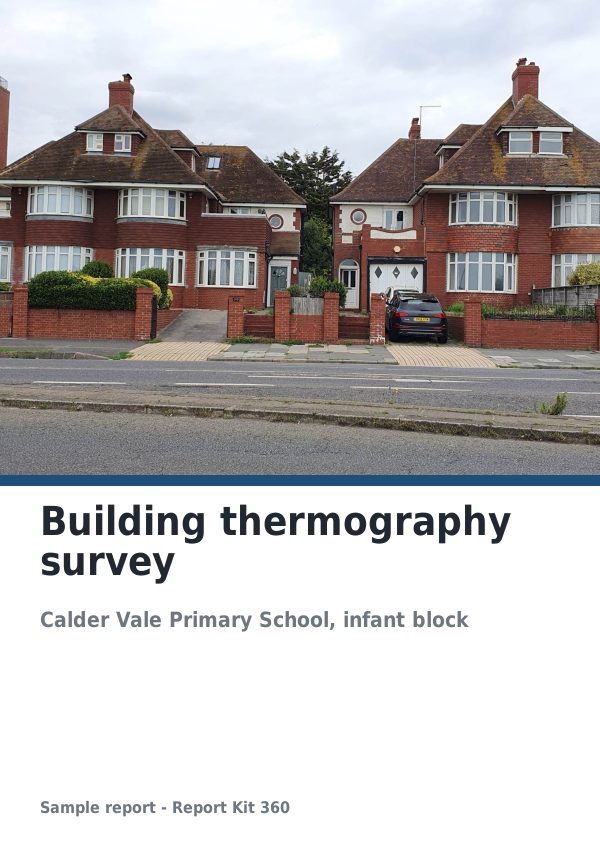
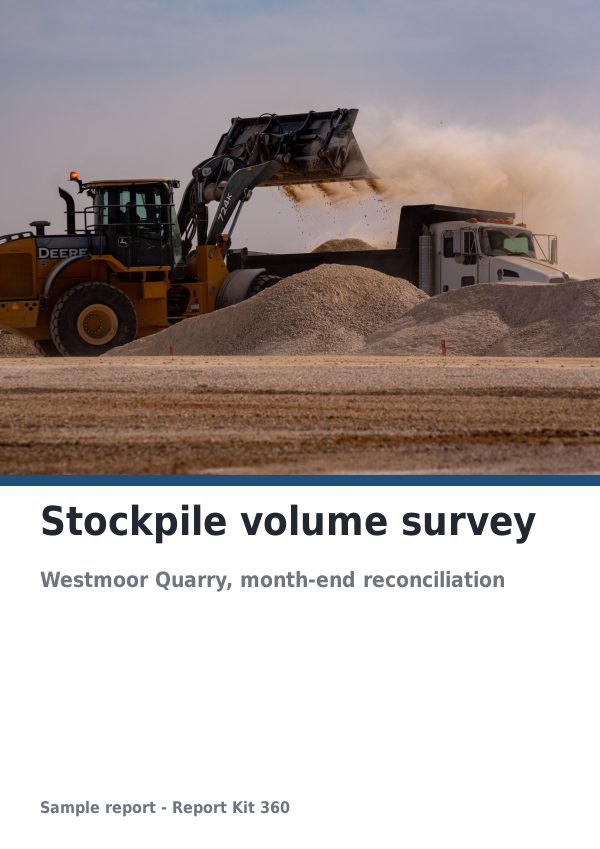
Three Pro-template samples: a PV verification, a building thermography survey and a landscape stockpile survey.
Solar PV inspections / Pro
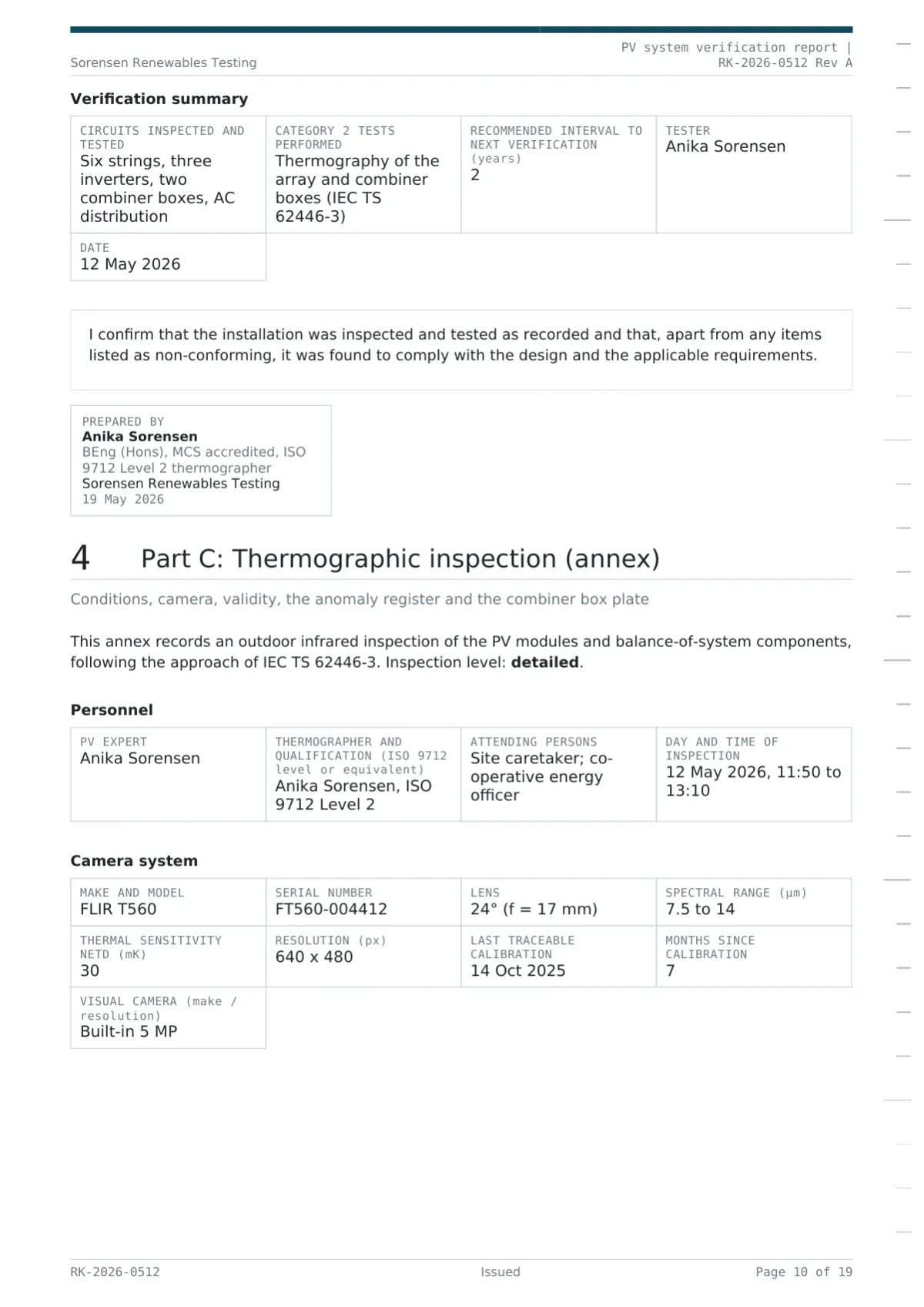
Fictional PV verification report in the IEC 62446-1 pattern from Report Kit 360: string test formula tables, an anomaly register and a thermogram.
Thermographic surveys / Pro
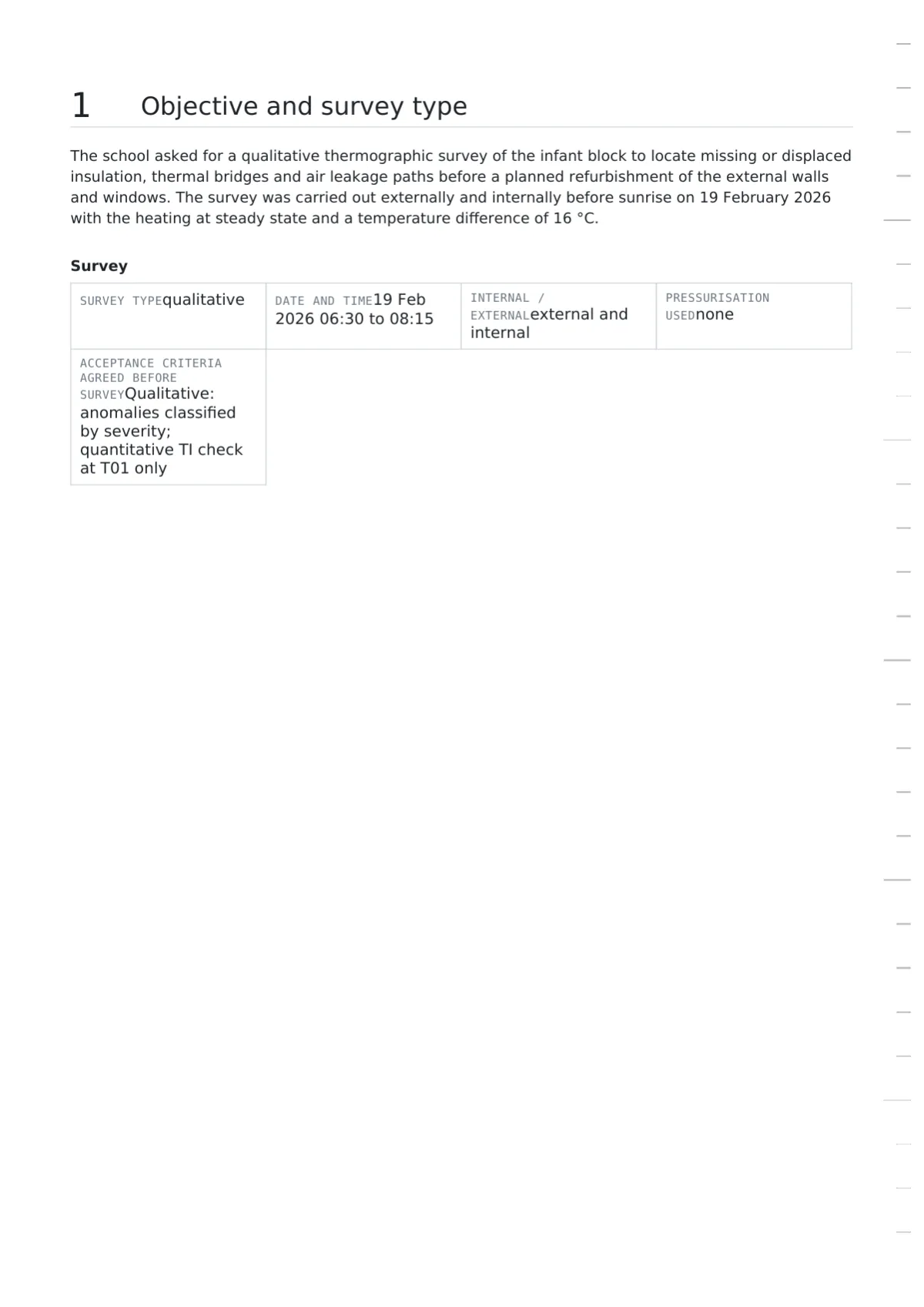
Fictional thermography survey in Report Kit 360: a thermogram sheet with spot temperatures, a Thermal Index formula, a validity check and a delta T chart.
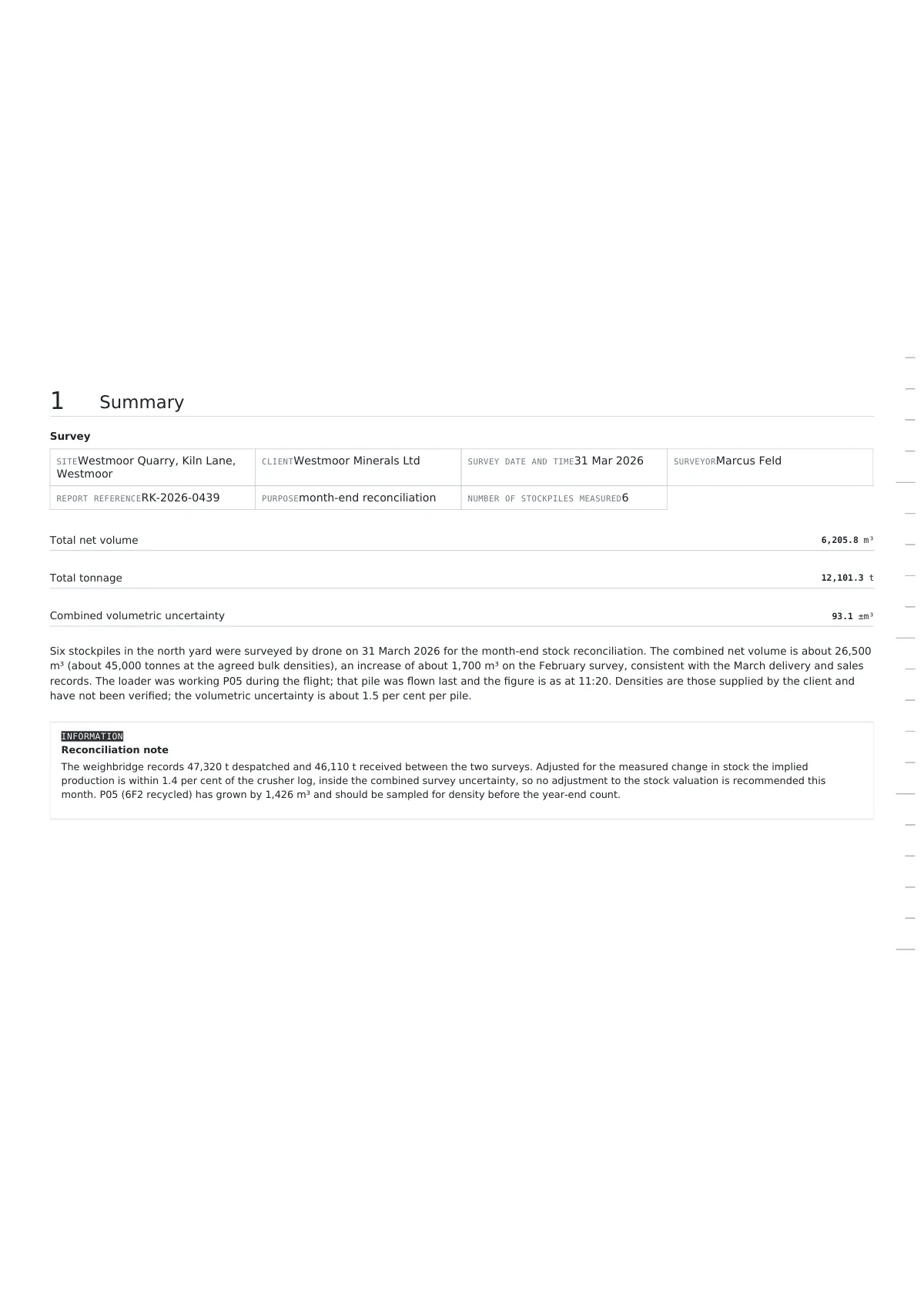
Volumetric surveys / Pro
Fictional stockpile volume survey in Report Kit 360: landscape formula tables for cut, fill, net and tonnage, calc fields and a reconciliation chart.
How to use it
On Basic you choose Gridline in the Design step, add your logo and primary colour and the grid, unit lines and scale bands follow; the Report Kit 360 mark sits in an outlined box on the cover sheet and in the footer strip. The three templates that default to Gridline are Pro templates, but the set itself is available to any report on either plan. On Pro you can clone it and change any element, for example swapping the scale band for stamps.
Sample PDF
Questions
Yes, on both plans. Gridline prints the company name under the cover rule and places the logo in the header band and the back-page company block, so a compact logo suits it. Upload it under Settings, Branding; the cool palette suits logos in blues, greys and black.
Your workspace accent becomes the primary, which Gridline uses for the cover and header rules, the table header tint, computed cell shading and the first chart series. The suggested primary is a deep teal-blue, #0F4C5C, on the cool grey palette. Rating colours always come from the template’s scheme.
Yes. The share page is produced by the same renderer, so grids, unit lines, scale bands, corner marks and thermal pairs are identical, and the graph-paper backgrounds are drawn in the browser too. Landscape pages show at full width on screen, and the DRAFT watermark appears in both until issue.
On Pro, yes. Clone Gridline and set the rating badge to stamps, roundels, tiles or tags; the matrix summary and counts can change independently. Scale bands are drawn with as many cells as the scheme has classes, so they already adapt to CoA 1 to 3 or a five-class severity scheme.
No. Gridline is a white-paper set because its graph-paper grid, scale ticks and shaded calculated cells rely on a neutral white; cream is offered only by Folio and Fieldbook. The grid lines are faint by design and may not show on a low-quality office print, which does not affect the tables or charts.
Next step
Pick a plan, add your logo, and issue your first report today.